Batch Purchase & Purchase Return lets you import many vendor bills (purchases) and purchase returns (credits) into LocalizeBook at once from an Excel file. Use it when you migrate unpaid bills from another system, such as opening your A/P balance, or when you need to record a large number of purchases.
Where to find it
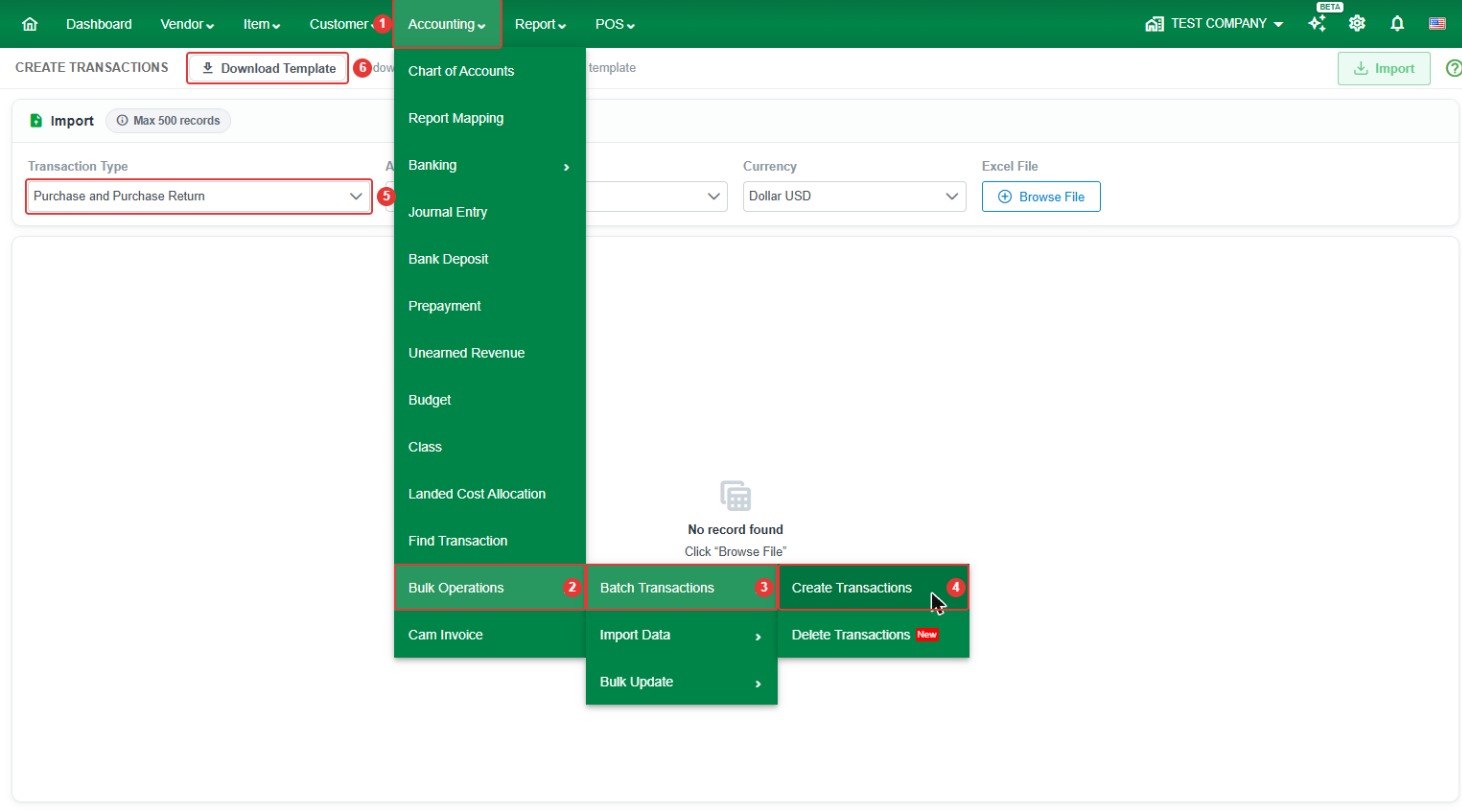
Go to Accounting > Bulk Operations > Batch Transactions > Create Transactions, then set Transaction Type to Purchase and Purchase Return.
- Record limit: up to 500 records per import. Split larger files into several imports.
- Account Payable: required. Select the A/P account the bills will be posted to.
- Currency: select the currency of the bills.
How to import purchases and purchase returns
Step 1. Go to Accounting > Bulk Operations > Batch Transactions > Create Transactions.
Step 2. Set Transaction Type to Purchase and Purchase Return. Select the Account Payable account and the Currency.
Step 3. Click Download Template to download the template for this transaction type.
Step 4. Fill in the template (see the column guide below) and save the Excel file.

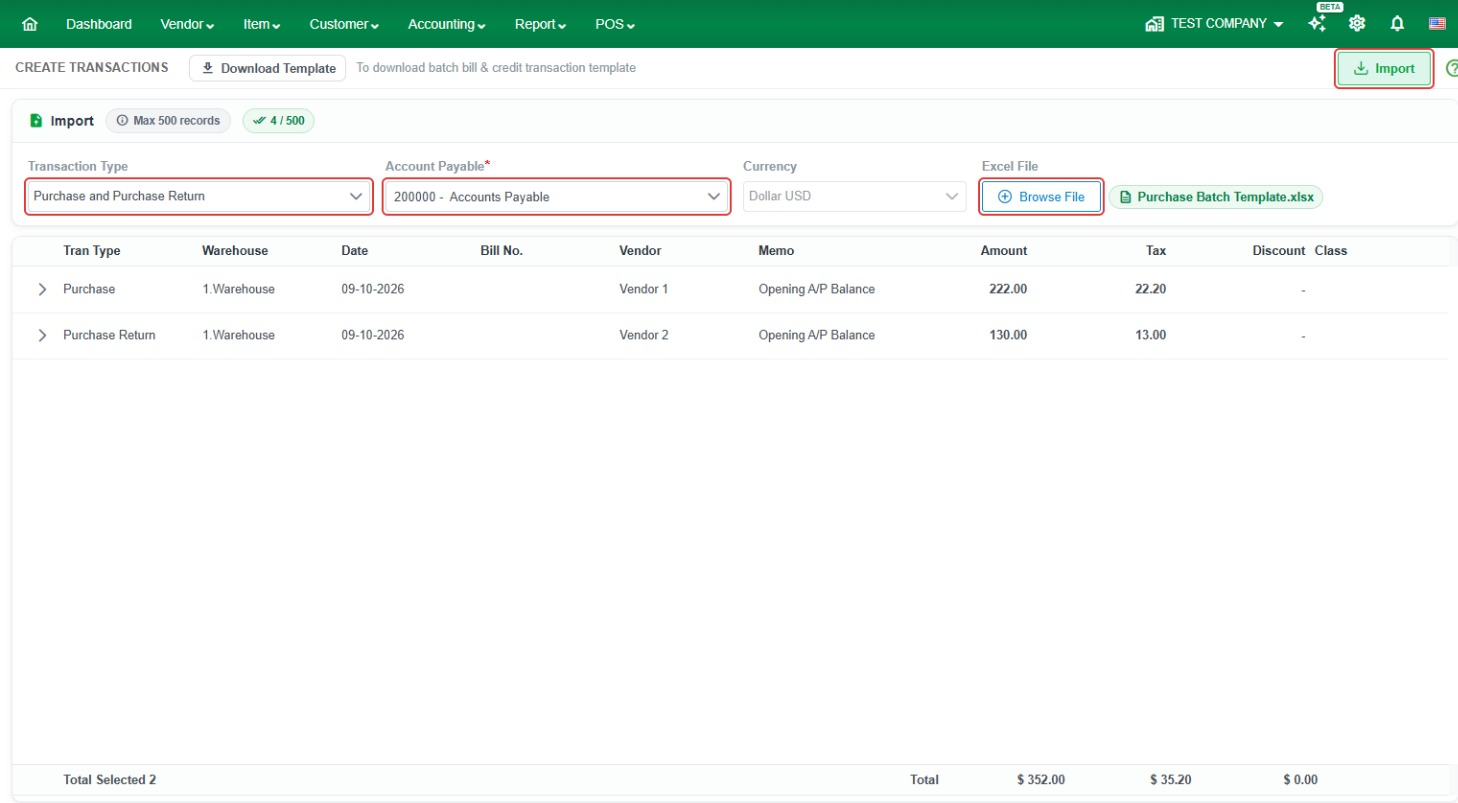
Step 5. Back in LocalizeBook, click Browse File and select your completed file. The rows are loaded on screen. If any row has a problem, an error message is shown so you can fix the file and load it again.
Step 6. When there are no errors, click Import to create the purchases and purchase returns.
Template column guide
Transaction details
- TRAN-TYPE – Enter PURCHASE for a bill or CREDIT for a purchase return.
- DATE (required) – The transaction date.
- NUM (required) – The bill or credit number.
- VENDOR (required) – The vendor's name.
- LOCATION – The warehouse for the purchase. If left blank, the default location is used.
- CLASS – The class for the purchase.
- MEMO – A note for the transaction. Leave blank if not needed.
Item lines
- ITEM CODE – The item's unique code. Leave blank if the item has no code.
- ITEM NAME (required) – The product name.
- UNIT NAME – The item's unit name. Do not include symbols. If the item has no unit, enter N/A.
- QTY (required) – The quantity.
- COST (required) – The purchase price per base unit.
- AMOUNT (required) – The total amount for the line.
- VAT – The VAT amount.
- DISCOUNT AMOUNT – The discount amount.
- CLASS ITEM – The class for the item line.
Expense lines
- MEMO EXPENSE (required for expense lines) – A description of the expense.
- AMOUNT EXPENSE (required for expense lines) – The expense amount.
- ACCOUNT CODE EXPENSE (required for expense lines) – The Chart of Accounts code for the expense.
- CUSTOMER PROJECT EXPENSE – The customer project the expense relates to.
- CLASS EXPENSE – The class for the expense line.
Common questions
How do I import a purchase return (credit)? Use the same template and enter CREDIT in the TRAN-TYPE column.
How many purchases can I import at once? Up to 500 records per import.
Which A/P account is used? The account you select in the Account Payable field on the Create Transactions page. When migrating opening balances, select your new A/P control account.
Why does my import show an error? Common causes are a name (vendor, customer, or item) that does not exactly match an existing record in LocalizeBook, an account code that does not exist in your Chart of Accounts, a missing required column, or a file with more rows than the record limit.
How do I delete transactions that were imported by mistake? Go to Accounting > Bulk Operations > Batch Transactions > Delete Transactions, set the Transaction filter to Bill or Purchase Return, click Search, select the transactions, and click Delete Transactions.